


BAHIA PALACE MARRAKECH
Discover the Splendor of One of Morocco’s Greatest Architectural Gems Open daily from 9:00 AM to 5:00 PM.
Ismail Mellak
9/11/20242 min read
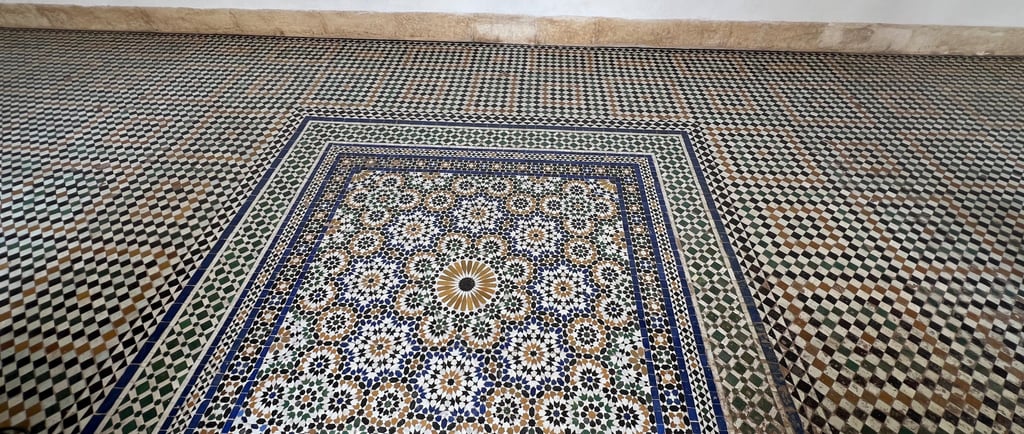
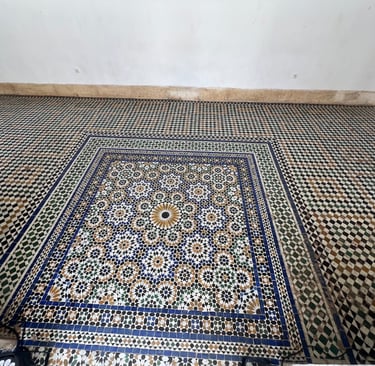
The Bahia Palace in Marrakech is a stunning example of Moroccan architecture and design. Built in the late 19th century, it is a sprawling complex of gardens, courtyards, and rooms that are filled with intricate details and vibrant colors. This essay will explore the history of the palace, its design, and its significance in Moroccan culture.
ABOUT
Nestled in the heart of Marrakech, the Bahia Palace is a stunning monument to Moroccan architecture and a testament to the country’s rich cultural history. Built in the late 19th century, the palace offers visitors a chance to explore an expansive complex of ornately decorated rooms, tranquil courtyards, and lush gardens.
Open daily from 9:00 AM to 5:00 PM.
ORIGINS AND CONSTRUCTION
Foundation:
The Bahia Palace was built in the 1860s by Si Moussa, the grand vizier of the Sultan, as a personal residence. It was later expanded and embellished by his son, Ba Ahmed, who was also a grand vizier, in the late 1890s. The name “Bahia,” which translates to “brilliance,” reflects the palace’s beauty and the ambition behind its creation.
Design and Artistry:
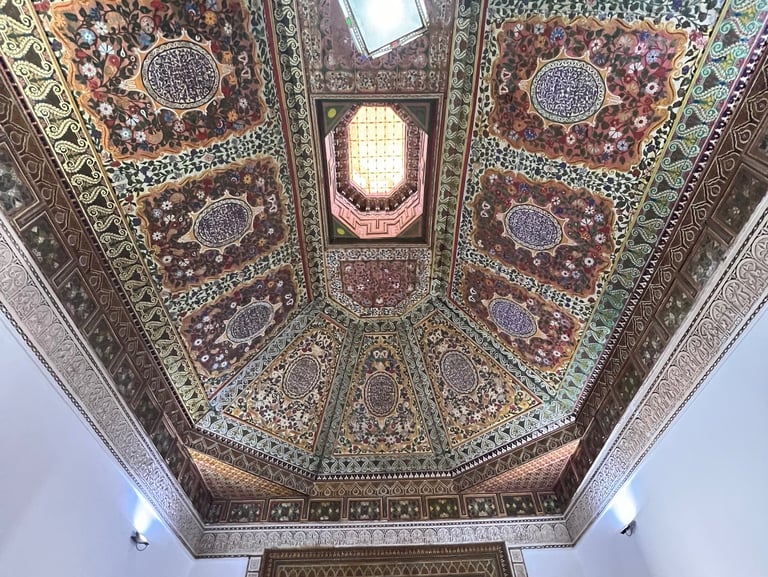
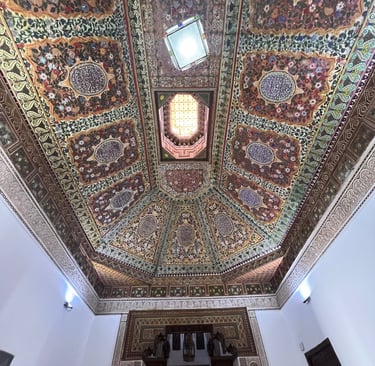
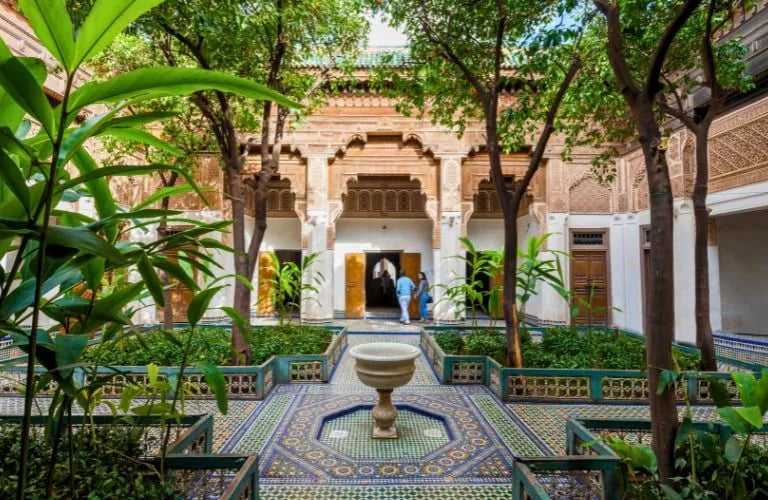
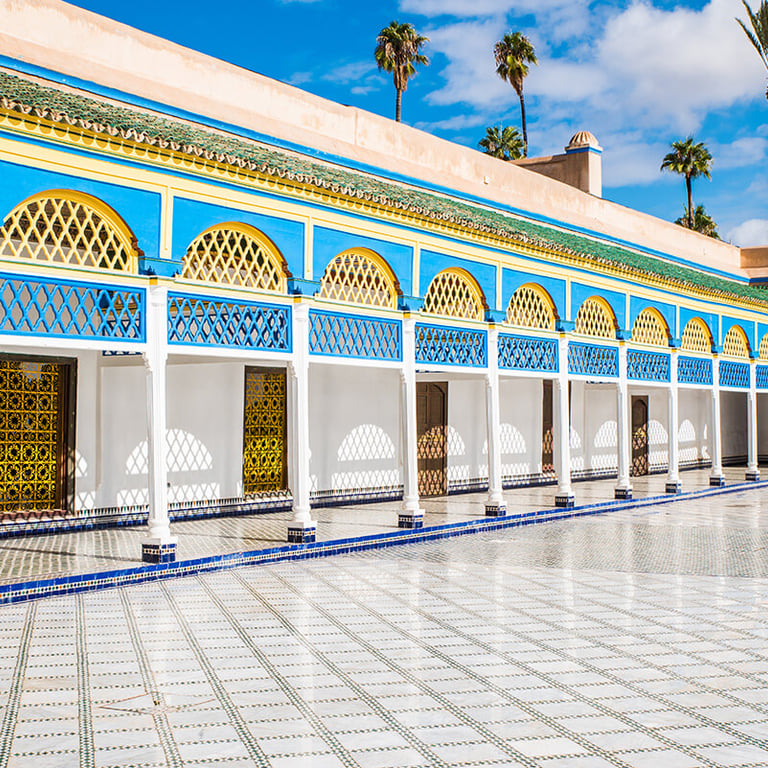
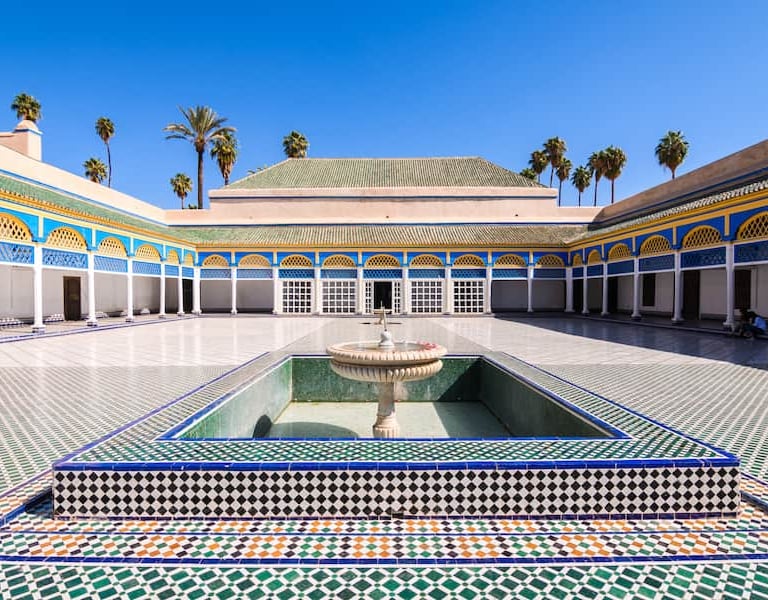
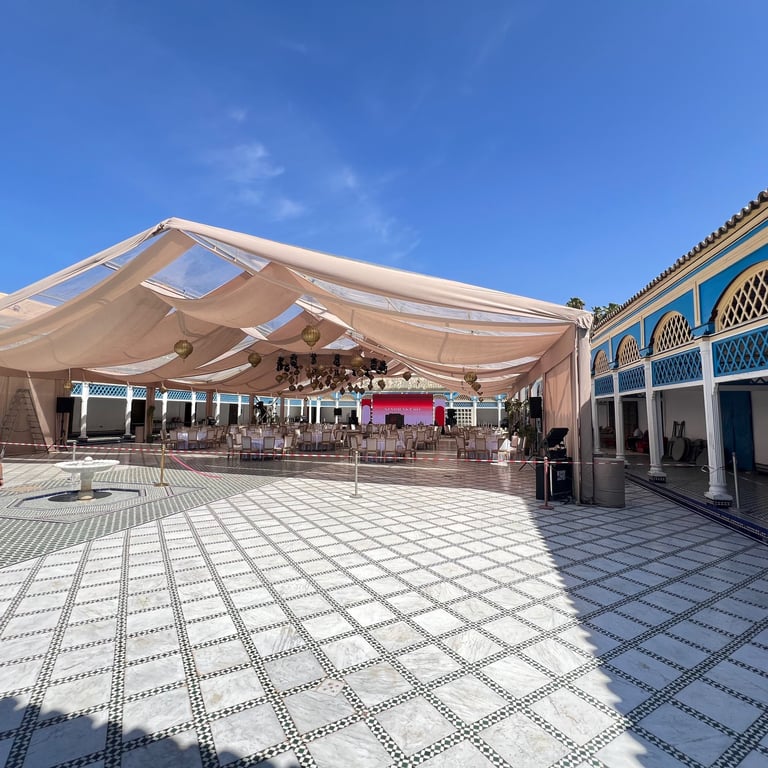
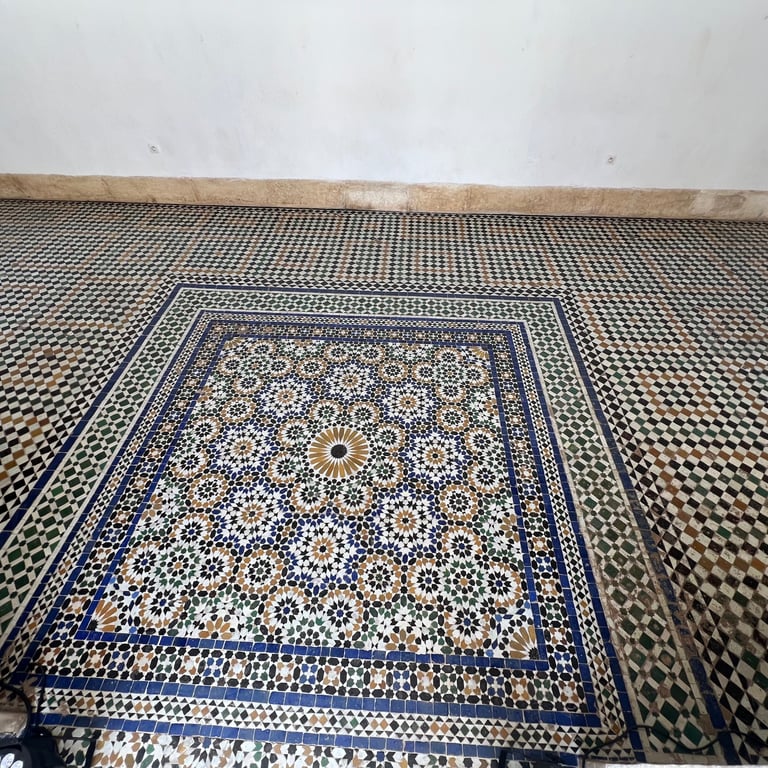
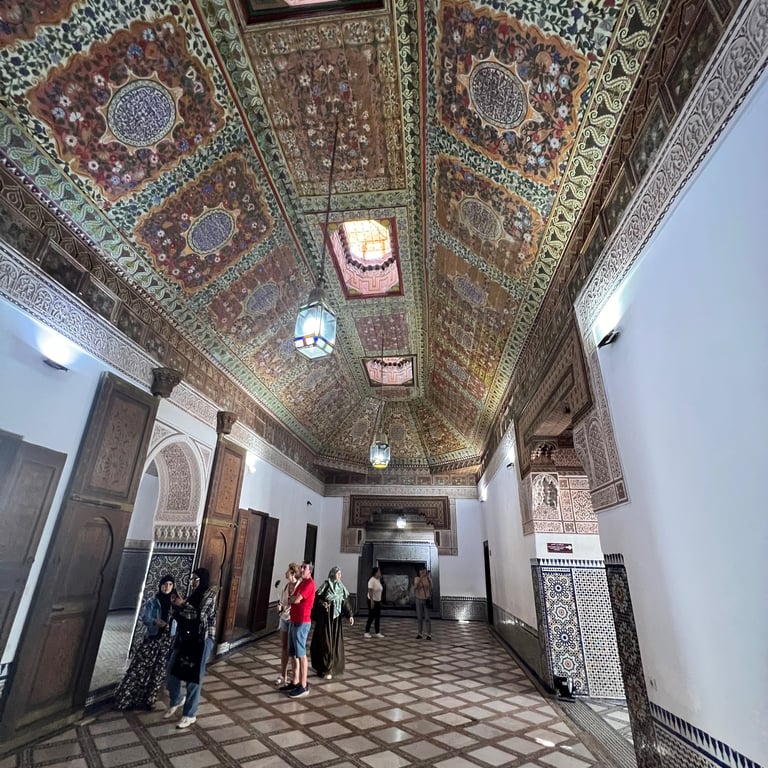
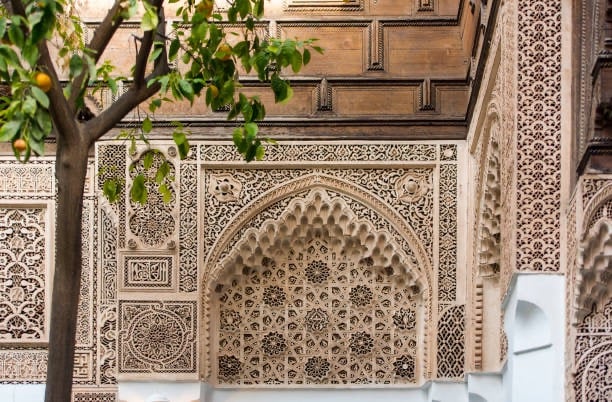
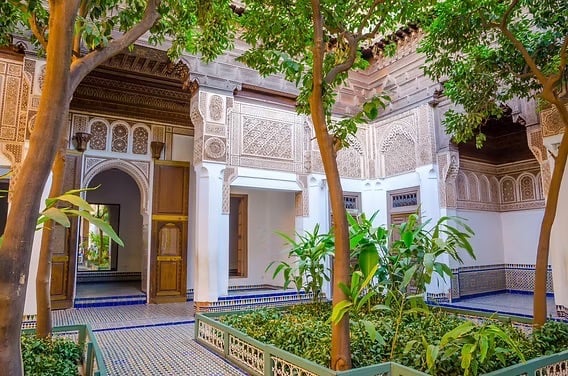
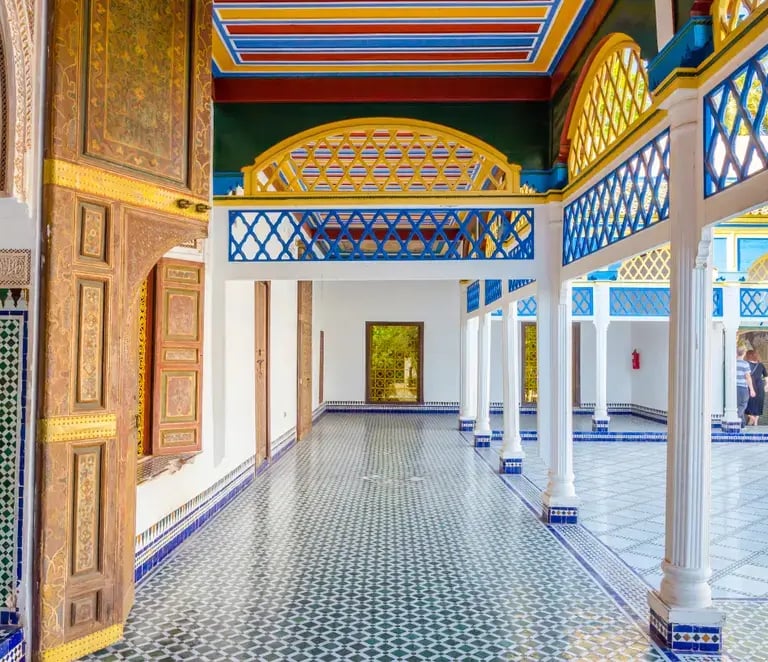
The palace showcases a blend of Islamic and Moroccan architectural styles, featuring intricate marquetry, stunning zellij (tile work), and ornate ceilings. Its design includes several riads (traditional Moroccan houses with interior gardens), a harem section, and a grand courtyard, which was used for entertaining distinguished guests.
HISTORICAL SIGNIFICANCE
A Royal Residence:
After Ba Ahmed’s death, the palace became a royal residence and remained so throughout various periods in Moroccan history. It has hosted numerous dignitaries and events, significantly influencing Morocco’s cultural and political landscape.
Cultural Impact:
Bahia Palace is not only a historic site but also a cultural symbol, representing the artistic and architectural prowess of Morocco. It continues to attract scholars, artists, and tourists who seek to understand the rich tapestry of Moroccan history and culture.
PRESERVATION AND TODAY
Restoration Efforts:
The palace has undergone several restoration projects to preserve its original artistry and architecture. These efforts ensure that Bahia Palace remains a source of pride and historical significance for Morocco.
A Living Museum:
Today, Bahia Palace is open to the public, serving as a museum that offers a window into Morocco’s royal past. It is also a favored location for cultural events and exhibitions, celebrating Moroccan culture and history.
Explore
Personalized tours and transportation in Morocco.
Contact
Booking
info@redmedinatrip.com
+212680209378
© 2024. All rights reserved.